
Storm Drain & Catch Basin Cleaning in Miami
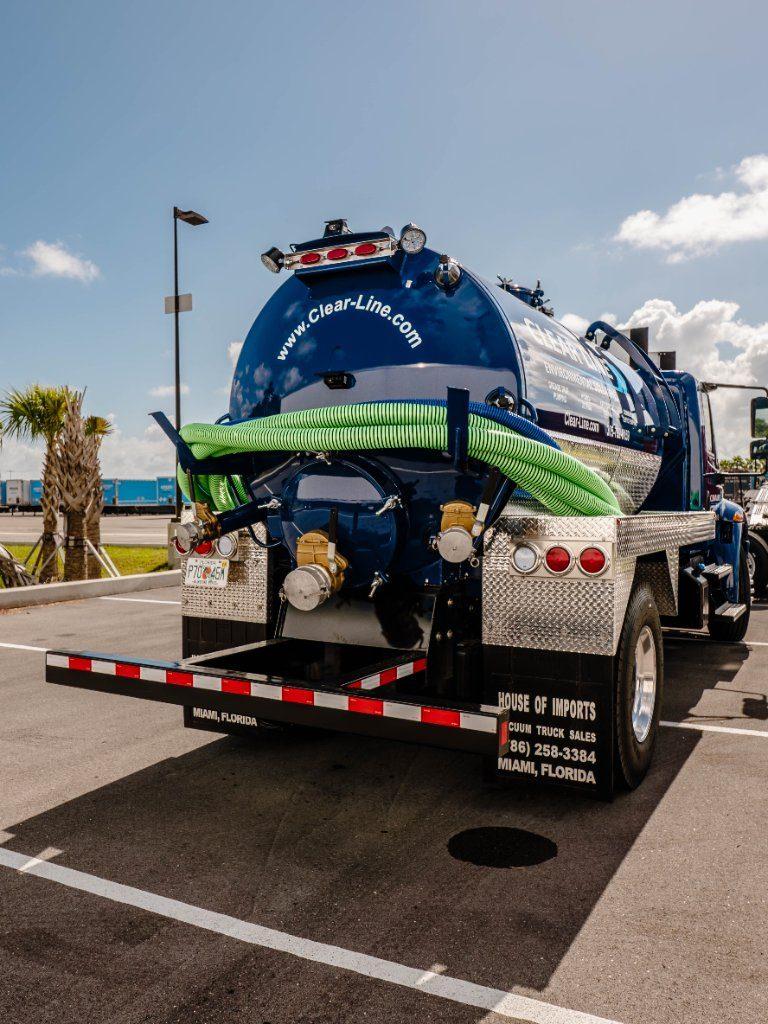
Clear Line and our Partner Network handle storm drain cleaning for private drainage systems at parking lots, shopping centers, HOAs, office parks and industrial sites across South and Central Florida. A licensed crew from our network vacuums catch basins, jets the connecting lines and inspects grates, inlets and outlets. We schedule it ahead of the June–November hurricane season, send you a report per structure and bill you once.
Key facts
- Systems
- Catch basins, inlets, grates, storm lines, exfiltration trenches, outfalls
- Method
- Vacuum truck removal plus hydro-jetting of connecting lines
- Frequency
- At least once a year; twice for heavy debris, trees or traffic
- Best timing
- Before hurricane season (June 1 – November 30)
- How it works
- One call to Clear Line; a licensed crew from our network does the cleaning; one report, one invoice
What storm drain cleaning includes
In South Florida, a storm drain that's half full of sand and leaves turns a normal afternoon downpour into a flooded parking lot. Private drainage systems need the same care as any other building system, and they're easy to forget because they only fail when it rains.
- Vacuum removal of sediment, trash, leaves and standing water from catch basins
- Hydro-jetting of connecting storm lines to restore flow
- Inspection of grates, frames, inlet and outlet pipes and baffles
- Notes on broken grates, settled structures or missing parts
- Camera inspection of lines that stay slow after cleaning (on request)
- Proper disposal of collected material
- A service report listing every structure cleaned
How a storm drain cleaning job runs
- 01
Map
On the first visit the crew locates and numbers every structure, so reports stay consistent year to year.
- 02
Vacuum
Sediment and debris come out of each basin down to the structure floor.
- 03
Jet
Connecting lines are jetted and flushed toward the outfall to clear sediment between basins.
- 04
Report
We send you a report per structure, with photos, for your property or compliance files, plus a single invoice.
Who is responsible for storm drains on private property?
Drains in public streets belong to the city or county. Catch basins, pipes and trenches inside a private parking lot, plaza or community are generally the property owner's or association's responsibility to maintain. Many of these systems were permitted with an expectation of ongoing maintenance, and a site that floods or sends sediment into public waterways can draw attention from the local stormwater program.
If you're not sure where your system ends and the public one begins, start with the site's drainage plans or the property's permit documents. On the first visit the crew maps every structure found on the property.
How often should storm drains be cleaned?
At least once a year for most commercial properties, ideally in the spring, before hurricane season. Sites with heavy tree cover, sand blowing in, construction nearby or a lot of truck traffic usually need twice a year. If a lot floods during ordinary storms, or water is still standing hours after the rain stops, the system needs service now.
Scheduled cleaning vs. waiting for a flood
| Criteria | Scheduled cleaning | Reactive cleanout |
|---|---|---|
| When it happens | Scheduled cleaning:Before rainy season and after major storms | Reactive cleanout:After the lot has already flooded |
| What's removed | Scheduled cleaning:Sediment in the sump, before it moves into pipes | Reactive cleanout:Sediment plus whatever has already clogged the outlet pipe |
| Property risk | Scheduled cleaning:Low | Reactive cleanout:Standing water, slip hazards, tenant complaints, possible pipe jetting |
| Records | Scheduled cleaning:Documented for your stormwater maintenance file | Reactive cleanout:An invoice after the fact |
Hurricane season preparation
- Clean catch basins and jet lines before June
- Clear grates of debris again ahead of named storms
- Check that outfalls and swales aren't blocked by vegetation
- Book post-storm service early; demand spikes after a hurricane
Google reviews
What our customers say
- Google
“Excellent Service. Highly recommend this company. Honest & reliable. Grease trap is smiling. Thank you.”
Lorraine Byrden - Google
“Clear Line Environmental exemplifies the highest level of professionalism. They consistently honor their commitments and deliver exceptional service every time.”
Gino Dominguez - Google
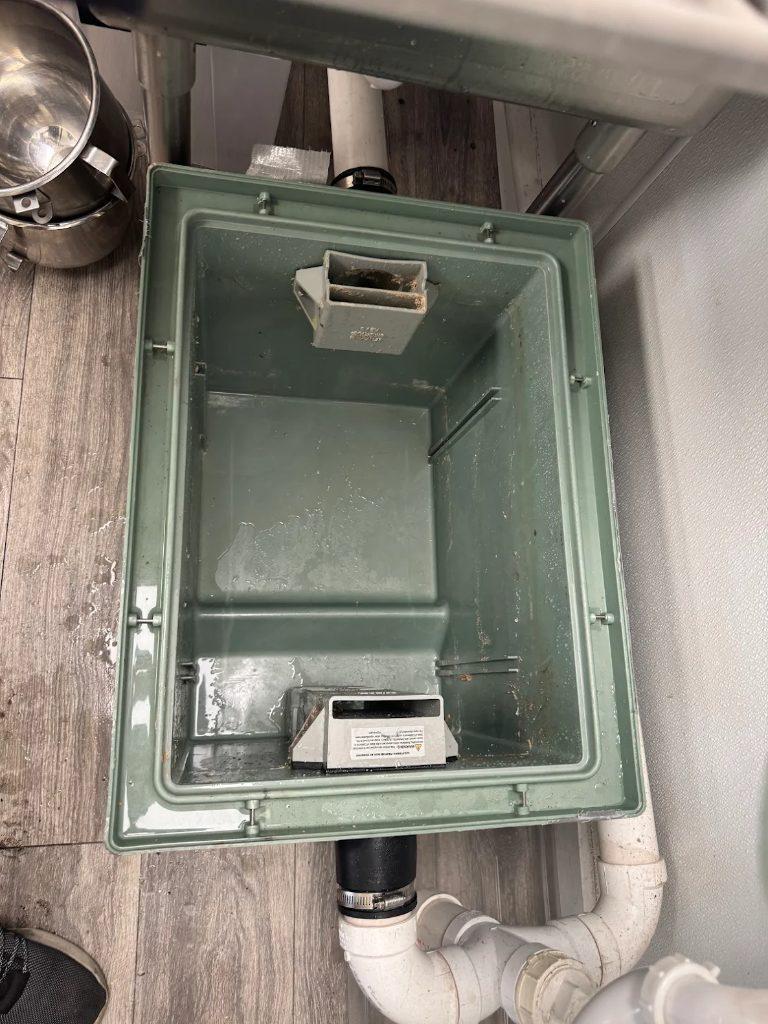
“Great operator left our grease trap spotless!”
William Golik - Google
“Clear Line Environmental Solutions in Miami, FL has been a great company to work with. They're known for reliable service and a truly professional team.”
Raul J. Muniz
Frequently asked questions
How often should commercial storm drains be cleaned?
At least once a year, ideally before hurricane season. Properties with heavy landscaping, sand, construction nearby or high traffic usually need cleaning twice a year.
Who is responsible for storm drain maintenance on private property?
Drains in public streets belong to the city or county. Catch basins and pipes inside a private lot, plaza or community are generally the owner's or association's responsibility to maintain.
Do you clean catch basins and inlet grates?
Yes. We take care of catch basins, inlets, grates, connecting lines and outfalls, note any damaged structures and send you the report.
Why does my parking lot flood when it rains?
Most often the catch basins and connecting lines are full of sediment and debris, so water can't drain away fast enough. Cleaning and jetting the system usually restores capacity. If not, a camera inspection finds the damaged section.
Do you provide documentation after cleaning?
Yes. We send you a service report listing each structure cleaned, with photos, for your property management or compliance files.
Can you respond to a storm drain blockage during a storm?
Our dispatch line is answered 24/7. We send the nearest available crew and put properties at risk of flooding first in line.
Further reading
- The Property Manager's Guide to Commercial Pumping in MiamiHow property managers keep grease traps, lift stations and storm drains maintained across a portfolio with one schedule and clean records.
- Hurricane Season Readiness: Protecting Your Pumping Systems in MiamiHow to get septic tanks, lift stations, grease interceptors and storm drains ready for hurricane season, and what to do after a flood.
Last reviewed:
Ready to get on a schedule?
Free estimate, flat pricing, and the paperwork handled at every visit.