
Compliance guide
Florida's grease hauler and manifest rules: what restaurants must do
Every grease trap or interceptor pump-out in Florida must be documented on a service manifest signed by the hauler, the restaurant (if open) and the disposal facility [1]. Since December 7, 2025, haulers need a DEP license and must use DEP Form 62-705.300(3) [3]. Restaurants keep a signed copy on site for one year [1].
Last reviewed 9 official sources
Key takeaways
- Section 403.0741, F.S. took effect July 1, 2022; DEP's rule chapter 62-705, F.A.C. took effect December 7, 2025 [2][3].
- Grease haulers need a DEP grease waste hauler license, renewed by March 1 each year; licenses run to April 1 [3].
- Every pump-out goes on DEP Form 62-705.300(3), which must show the hauler's DEP license number [3].
- The hauler may not return grease waste or graywater to your trap, and may dump only at a disposal facility [1].
- Keep each signed, completed manifest on site for 1 year; your county and city also get a copy [1].
- Local FOG rules (such as Miami-Dade DERM's permit) still apply and may be stricter [1][8].
At a glance
- DEP rule
- Chapter 62-705, F.A.C., effective December 7, 2025 [3]
- Who needs a license
- Grease waste haulers (DEP license); self-cleaners with traps of 55 gal or less are exempt from licensing only [3]
- Manifest form
- DEP Form 62-705.300(3), Grease Waste Service Manifest [3]
- Signatures
- Originator (if open) + hauler at pickup; hauler + disposal facility operator at disposal [1]
- Copy to you
- At pickup, then the completed copy within 30 days of disposal [1]
- Record retention
- 1 year on site, for both the originator and the hauler [1]
- Top hauler fine
- At least $5,000 plus a 12-month license revocation for repeat unlawful disposal [1]
What s. 403.0741, F.S. requires
Section 403.0741 of the Florida Statutes governs how grease waste leaves a food service establishment and where it ends up. It applies to every “originator,” which the law defines as a food service establishment that processes, prepares or serves food or beverages to the public, including restaurants, commercial kitchens, cafeterias, hotels, school kitchens, hospitals, prisons and care institutions [1]. “Grease waste” is the fats, oils and grease retained in a grease interceptor or grease trap; receptacles made specifically for used cooking oil or fats and bones are not grease traps under the law [1].
- A hauler who removes grease waste must take it to a disposal facility, meaning a permitted or certified waste management facility authorized to receive grease waste [1].
- A hauler may not return grease waste or graywater (kitchen sink wastewater) to a grease interceptor or trap, and may not dispose of grease waste anywhere other than a disposal facility [1].
- A hauler must document every removal and disposal on a service manifest, electronic or paper [1].
- Inspecting entities must verify that an originator has a contract with a hauler and that removal and disposal are documented; DEP periodically inspects haulers' manifests [1].
The current (2026) statute lists only one source in its history, ch. 2022-95, Laws of Florida, and we found no later law amending it [1]. The law also directs DEP to adopt rules to implement it [1]; that is chapter 62-705, F.A.C., described below.
Law and rule history
May 6, 2022
CS for SB 1110 becomes law
Approved by the Governor and filed with the Secretary of State as ch. 2022-95, Laws of Florida, creating s. 403.0741, F.S. [2]
July 1, 2022
Statute takes effect
Manifest, disposal and penalty requirements of s. 403.0741, F.S. apply statewide [2].
December 2025
DEP forms adopted
Hauler license application, Grease Waste Service Manifest and disposal facility certification forms carry a December 2025 effective date [3].
December 7, 2025
Chapter 62-705, F.A.C. takes effect
Rules 62-705.200, .300 and .400 (definitions, hauler requirements, disposal facility certification) become effective [3].
June 5, 2026
Deadline for existing haulers
Haulers already operating had to apply for a DEP grease waste hauler license before this date (180 days after the rule took effect) [3][5].
December 7, 2026
Deadline for existing disposal facilities
Facilities operating without a DEP permit or certification must apply for certification before this date [3][5].
Every March 1 / April 1
Hauler renewal cycle
Renewal applications are due by March 1; each license is valid until April 1 of the following year [3].
Who must be licensed, and how to check a hauler
Under rule 62-705.300, F.A.C., any person who removes and transports grease waste for disposal, processing or recycling is a hauler and must hold a DEP grease waste hauler license, applied for on Form 62-705.300(2) [3]. A new hauler must apply at least 30 days before starting work, renewals are due by March 1 each year, and a license is valid until April 1 of the following year [3]. A licensed hauler who does not comply can have the license denied, suspended or revoked, on top of other state and local penalties [3].
There is one narrow exception. A “self-cleaner” is an originator that removes grease waste from its own grease trap of 55 gallons or less, dewaters it, containerizes it and transports it to a permitted solid waste management facility authorized to accept grease waste or to a certified grease waste disposal facility [3]. Self-cleaners do not need a hauler license, but they must still follow the rest of the rule and the statute [3]; DEP's fact sheet tells them to keep signed service manifests [5].
- Look at the manifest: the rule requires every hauler to list its DEP hauler license number on the Service Manifest [3], and DEP's guidance says the company name should match the name on the license [7].
- Ask DEP: the Grease Waste program can be reached at 850-245-8705 or Grease.Waste@FloridaDEP.gov [4]. The program page we reviewed does not publish a searchable list of licensed haulers [4].
- In Miami-Dade, also check the local layer: DERM tells FOG generators to use permitted haulers only and to request its current list of grease trap haulers at DERMPRED@miamidade.gov or 305-372-6820 [9].
How the service manifest moves: who signs, who gets copies, how long to keep them
The statute defines the service manifest as a recordkeeping system with three parts: an originator section, a hauler section and a disposal facility section [1]. The rule makes DEP Form 62-705.300(3) the required format [3]. The manifest follows the waste from your trap to the disposal facility and back to you.
- 01
At pickup, during your hours
You and the hauler both sign, confirming the information is accurate, and the hauler gives you a copy of the signed manifest [1].
- 02
At pickup, when you are closed
If the work happens while you are closed or before or after your hours, the hauler signs alone and leaves a signed copy in a spot you designate, or makes it available to you electronically [1]. DEP's guidance allows only your name, signature and date to be left blank, and only in that case [7].
- 03
At the disposal facility
The disposal facility operator and the hauler sign, verifying the information [1]. The operator provides a billing receipt or ticket number for the manifest [6].
- 04
Within 30 days of disposal
The hauler sends you, and the county and municipality where you are located, a copy of the completed manifest with all signatures [1].
- 05
Keep it for 1 year
You and the hauler each keep a copy of the signed, completed manifest on site for 1 year [1]. The hauler keeps its copy at its place of business, available for inspection during business hours or within five business days of a request [3].
The statute and rule do not set a number of paper copies. What they require is who signs, who receives the completed manifest and who keeps it [1][3]. Electronic manifests are allowed [1].
What a correct manifest looks like
Form 62-705.300(3) has three sections. The statute sets the minimum content [1]; the form and DEP's completion guidance fill in the details [6][7]. Use this table to check the copy you are handed.
| Section | Field | What to check |
|---|---|---|
| Header | Manifest number | Entered in the top-left cell [7] |
| A. Hauler | Company name, address, phone, county, contact name and email | Company name matches the DEP license [7]; name, address and phone are required by statute [1] |
| A. Hauler | Driver name | First and last name of the driver [7] |
| A. Hauler | Hauler License # | The DEP grease waste hauler license number [3][7] |
| A. Hauler | Truck load capacity and Tank 1–4 (gallons) | Capacity equals the sum of the tanks; unused tanks marked Not Applicable [7] |
| A. Hauler | Date of grease removal | Same date as the removal date in Section B [7] |
| B. Originator | Your company name, address, phone, county, contact | Address is where the waste was generated and picked up [7] |
| B. Originator | During business hours: Yes / No | Decides whether your signature is required [7] |
| B. Originator | Type of receptacle | Interceptor, trap, outside, inside, other [6] |
| B. Originator | Trap condition | Short description of the trap's condition [7]; statute requires the condition and verification it was cleaned and no graywater returned [1] |
| B. Originator | Amount removed per trap (Trap 1–8, gallons) | Gallons for each trap; Not Applicable only for traps not serviced [7] |
| B. Signatures | Hauler printed name, signature, date; originator operator name, signature, date | Certifies Sections A and B; your lines may be blank only for after-hours service [6][7] |
| C. Disposal facility | Facility name, contact, address, phone, county | Required by statute [1] |
| C. Disposal facility | Date of disposal; total gallons received | Statute requires the amount disposed [1] |
| C. Disposal facility | Certified or permitted? Yes / No | Should be Yes: disposal is allowed only at a disposal facility [1][7] |
| C. Disposal facility | Billing receipt / ticket number | Issued by the facility to the hauler [1][6] |
| C. Signatures | Hauler and disposal facility operator, with dates | Certifies gallons unloaded match gallons removed (may cover several originators) [6] |
What falls on the restaurant and what falls on the hauler
| Duty | Originator (restaurant / establishment) | Hauler |
|---|---|---|
| License | None, unless you haul yourself; self-cleaners (traps of 55 gal or less) are exempt from licensing [3] | DEP grease waste hauler license, renewed by March 1 [3] |
| Contract | Inspectors verify you have a contract with a hauler [1] | Holds the contract with you |
| Manifest | Sign at pickup if open; designate a spot for after-hours copies [1] | Document every removal and disposal on Form 62-705.300(3) [1][3] |
| Copies | Receive a copy at pickup and the completed copy within 30 days [1] | Send completed copy to you, your county and your city within 30 days [1] |
| Retention | Keep the signed, completed manifest on site 1 year [1] | Keep each manifest 1 year from disposal; produce within five business days if asked [3] |
| Disposal | — | Only at a permitted or certified disposal facility [1] |
| Fines in the statute | None listed for originators [1] | $100 to $5,000+ and license action [1] |
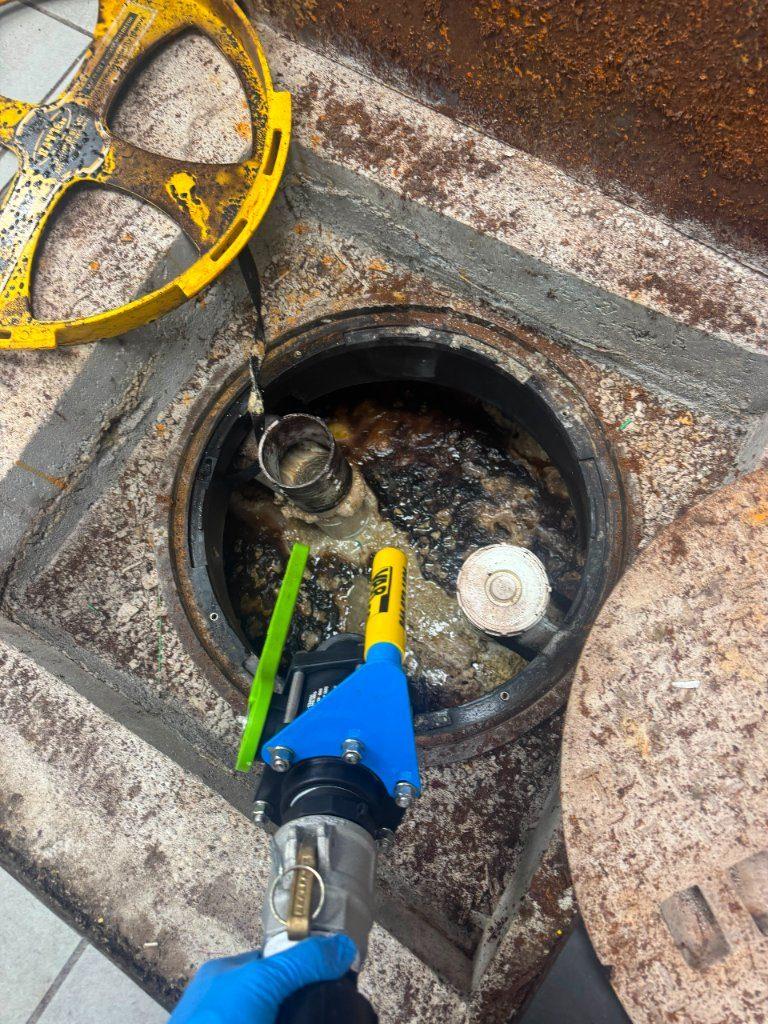
The statute does not use the words “full pump-out,” but it comes close. A hauler may not return grease waste or graywater to the trap, the manifest must verify that the trap was cleaned and that graywater was not returned, and a hauler can be fined for each failure to clean a trap [1]. The rule defines “clean” as removing grease waste so the trap or interceptor stays in service and in good working order [3]. Pumping, separating the water on the truck and pouring it back into the trap (often called decanting) is the practice the law prohibits.
Local fines are a separate question. The statute lets local governments collect fines for manifest violations and adopt stricter ordinances [1], so a restaurant can still face local enforcement under its FOG permit even though the state penalties target haulers.
Disposal facilities and penalties
No one may build or run a grease waste disposal facility without a DEP permit or certification [3]. Facilities already permitted under chapters 62-701, 62-620 or 62-640, F.A.C. need no separate certification if their permit covers grease waste [3]. Certifications last three years [3]. Certified facilities must finish disposal, processing or recycling of grease waste within six months of receipt unless DEP authorizes another timeframe, and keep monthly records, in gallons, of grease waste received, its originator, county of origin and final disposition, for three years [3].
| Violation | Penalty |
|---|---|
| Each failure to provide or retain a service manifest | Administrative fine up to $100 [1] |
| Each failure to clean a grease interceptor or trap | Administrative fine up to $250; an inspecting entity may impose it during a trap inspection [1][3] |
| Unlawful disposal of grease waste | Administrative fine of at least $2,500 and license suspension of at least 30 days [1] |
| Second or later unlawful disposal | Administrative fine of at least $5,000 and license revocation of at least 12 months [1] |
An “inspecting entity” is broad: any state agency, county, city, special district or utility authority with authority to inspect originators' traps or haulers [3].
How the state rules fit with county and city FOG permits
The state law is a floor, not a ceiling. Local governments may receive manifests from haulers, receive violation reports, collect and keep fines for manifest violations and impose license actions, and they may adopt grease ordinances that are stricter or more extensive than the statute [1]. Fiscally constrained counties and small counties, as defined in other statutes, may opt out [1].
In Miami-Dade, any non-residential facility that handles, prepares or processes food and discharges or may discharge FOG to the public sewer needs a FOG Discharge Control operating permit from DERM; the permit runs January 1 to December 31, is renewed annually and is not transferable [8]. DERM also tells generators to use permitted haulers only and to keep all receipts of pump-outs and maintenance [9]. So a Miami-Dade restaurant answers to both layers: the state manifest and the conditions written into its DERM permit. In Broward and Palm Beach, grease programs are run by the local utility or city, so check which one serves your address.
How Clear Line fits in
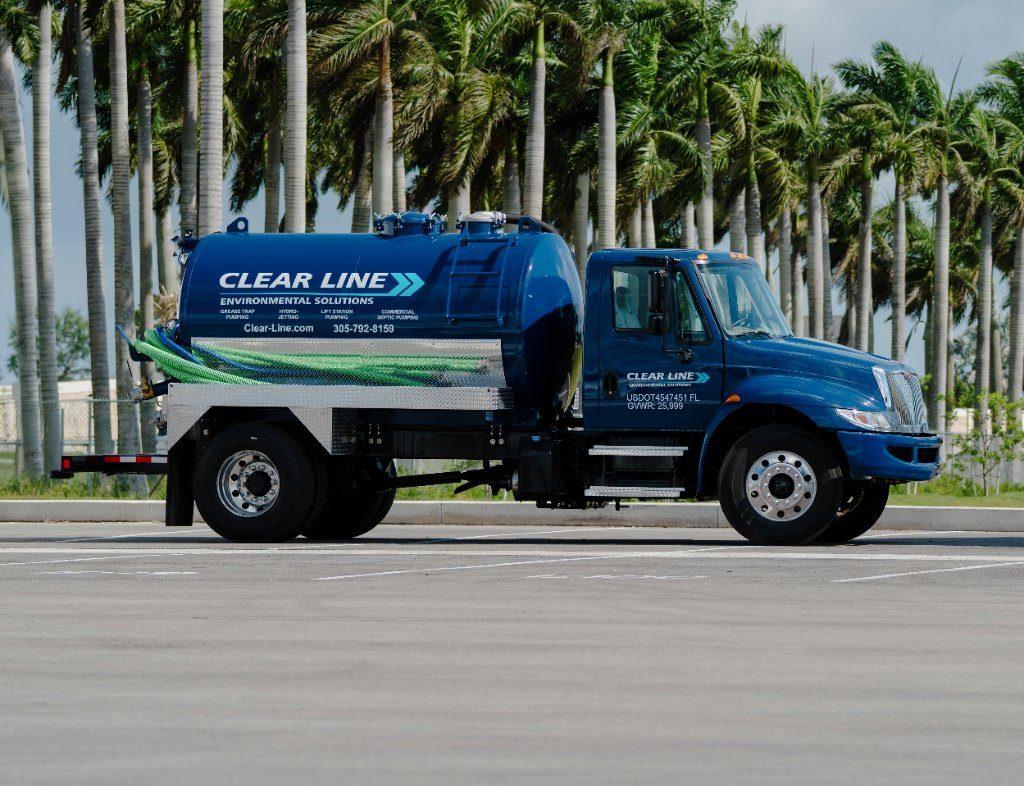
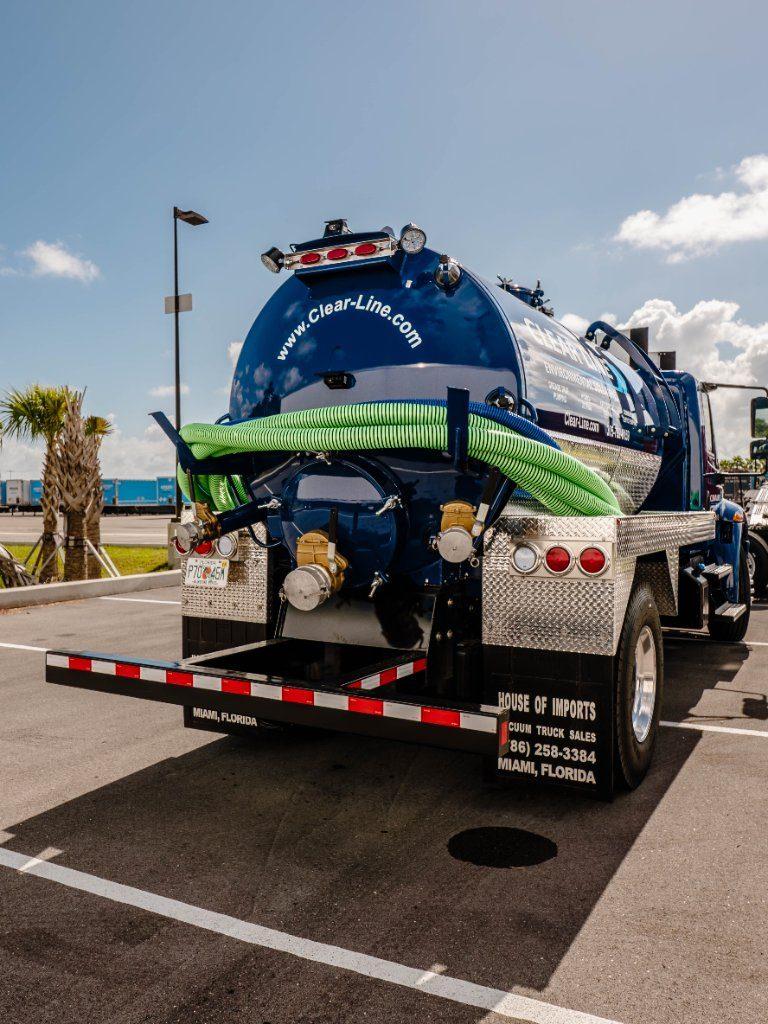
This is the operational side. When we pump your trap or interceptor, the technician fills in the manifest on site, you or your manager sign it if you are open, and you keep the copy. If we service you after hours, we leave the signed copy wherever you tell us, so pick a spot (an office folder, a clipboard by the back door) and let us know.
- Ask us for our license and permit details before the first visit, and compare them with the manifest you receive.
- Keep a single binder or shared folder: the pickup copy, then the completed copy when it comes back, filed by date.
- Tell us your permit's pump-out frequency and we will build the schedule around it.
- For a backup or overflow outside your normal schedule, call the 24/7 line; emergency pump-outs get a manifest too.
- If a licensed partner from our Partner Network handles your pump-out, the manifest carries that partner's hauler details. Ask us for them before the first visit.
Grease manifest checklist for restaurants and facility managers
- Keep a copy of your contract with your grease hauler on site.
- Get your hauler's DEP grease waste hauler license number and confirm it with DEP if unsure.
- In Miami-Dade, confirm the hauler is on DERM's permitted list.
- Designate a spot where after-hours manifests should be left.
- Check the manifest is DEP Form 62-705.300(3), not a homemade receipt.
- Check the license number, driver name and removal date are filled in.
- Check gallons removed are listed for each trap serviced.
- Check the trap condition box is filled in.
- Sign the manifest if the pump-out happened while you were open.
- Watch for the completed copy, with disposal facility signature and ticket number, within 30 days.
- File every completed manifest and keep it on site for at least 1 year.
- Keep your DERM or local FOG permit current and follow its pump-out frequency.
Frequently asked questions
Does Florida require a manifest for every grease trap pump-out?
Yes. Under s. 403.0741, F.S., the hauler must document every removal and disposal of grease waste on a service manifest, and DEP rule 62-705.300 requires Form 62-705.300(3) for it.
How long does a restaurant have to keep grease manifests in Florida?
State law requires the originator and the hauler to keep a copy of the signed, completed manifest on site for 1 year. Your local FOG permit can require more, so check its conditions.
Do grease haulers need a state license in Florida?
Yes. Since chapter 62-705, F.A.C. took effect on December 7, 2025, grease waste haulers need a DEP license. Haulers already operating had to apply before June 5, 2026, and licenses are renewed by March 1 each year.
Can I clean my own grease trap in Florida?
Only in a narrow case. An originator with a grease trap of 55 gallons or less can act as a self-cleaner: dewater the waste, containerize it and take it to an authorized facility. Self-cleaners skip the hauler license but must follow the rest of the rule, including manifests.
Who signs the grease waste manifest?
At pickup, the hauler and the originator sign if the business is open; if it is closed, the hauler signs and leaves a copy. At disposal, the hauler and the disposal facility operator sign.
Can the hauler put water back into my grease trap?
No. The statute prohibits a hauler from returning grease waste or graywater to a grease interceptor or grease trap, and the manifest must verify that graywater was not returned.
What are the penalties for illegal grease dumping in Florida?
For a hauler, at least $2,500 and a license suspension of at least 30 days for unlawful disposal, and at least $5,000 and a revocation of at least 12 months for a second violation.
Does the state manifest replace my Miami-Dade DERM grease permit?
No. The statute lets local governments adopt stricter grease rules. In Miami-Dade, a food facility that can discharge FOG to the public sewer still needs its annual DERM FOG operating permit.
Related services
Sources
Official sources. Bracketed numbers in the text point to this list.
- [1]Section 403.0741, Florida Statutes (2026) — Grease waste removal and disposal · The Florida Senate
- [2]Chapter 2022-95, Laws of Florida (CS for SB 1110) · Florida Department of State
- [3]Chapter 62-705, F.A.C. — Grease Waste Removal and Disposal · Florida Administrative Code (flrules.org)
- [4]Grease Waste program page · Florida Department of Environmental Protection
- [5]Grease Waste Overview (fact sheet) · Florida Department of Environmental Protection
- [6]Form 62-705.300(3), Grease Waste Service Manifest · Florida Department of Environmental Protection
- [7]Grease Waste Service Manifest Completion Guidance · Florida Department of Environmental Protection
- [8]Fats, Oils and Grease (FOG) Discharge Control Operating Permit · Miami-Dade County RER / DERM
- [9]FOG — Fats, Oils and Grease (fact sheet) · Miami-Dade County DERM
This guide summarizes public rules to help owners and managers. It is not legal advice. Rules change: always confirm with the agency that issues your permit.
Get a free quote
What s. 403.0741, F.S. and DEP rule 62-705 require of Florida restaurants and grease haulers: DEP licenses, manifest fields, signatures and records.