Why Miami-Dade Restaurants Can't Afford to Skip Grease Trap Pumping During the World Cup
The world has arrived in Miami. With Hard Rock Stadium hosting seven FIFA World Cup 2026 matches this summer — Brazil, Portugal, Colombia, and Uruguay all played here, and the quarterfinal and bronze final are still to come — South Florida is packed with visitors, fans, and watch-party crowds from Miami Gardens to Coral Gables to South Beach.
For restaurant owners, that's the opportunity of the year. Every match day and every off-day in between means fuller dining rooms, longer waits, and more tickets flying out of the kitchen than at almost any other point on the calendar.
But here's the part that doesn't show up on your P&L until it's too late: every one of those extra plates is sending more fats, oils, and grease (FOG) down your drains. And your grease trap doesn't care how good your reviews are or how big the crowd is. It only cares about how much grease it's holding — and whether someone is emptying it before it fills up.
More Customers Means More Grease. It's That Simple.
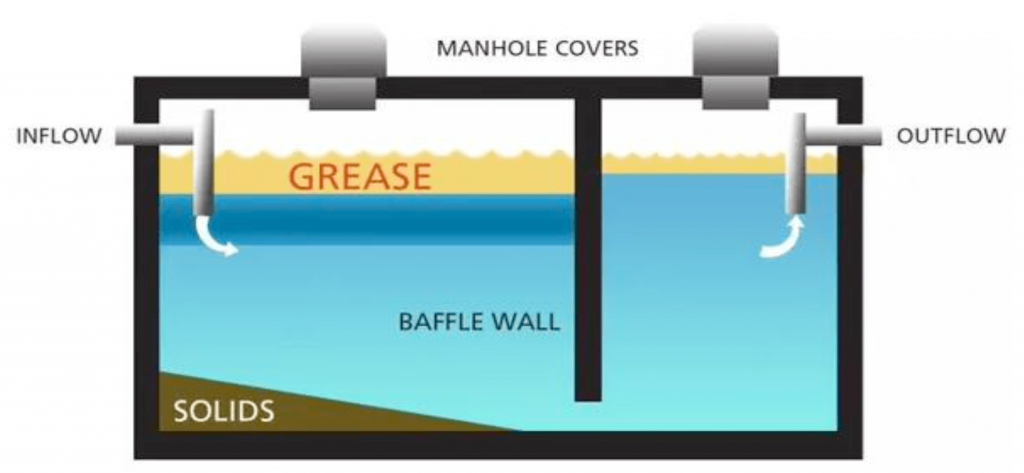
A grease trap works by slowing wastewater down long enough for grease to float to the top and solids to sink to the bottom, so only relatively clean water passes into the sewer line. It has a fixed capacity. When your kitchen is running at normal volume, that capacity might last you six or eight weeks. When you're running at World Cup volume — match-day surges, tourists eating out three meals a day, watch parties running late into the night — the same trap can hit capacity in half the time, or less.
The math is unforgiving. Double the covers, double the grease. Add in heavier menus, more fried items, and staff who are moving too fast to scrape plates properly into the trash, and your trap fills faster than your normal pumping schedule assumes. Most restaurants get into trouble not because they ignored their trap, but because they kept the same pumping cadence through a stretch that demanded a tighter one.
What Happens When You Fall Behind
Once a grease trap exceeds the "25% rule" — where FOG and solids make up more than a quarter of the trap's total depth — it stops working the way it's supposed to. Grease starts carrying over into your sewer lateral instead of being captured. From there, the problems stack up fast:
None of these are hypothetical. In a Miami kitchen running at tournament volume, they're the predictable result of running a normal schedule through an extraordinary month.
The DERM Compliance Piece Most Owners Overlook
In Miami-Dade County, grease traps aren't just an operational headache — they're regulated. The Department of Environmental Resources Management (DERM) requires food service establishments to maintain their grease interceptors and, critically, to keep proper records of when they were pumped and where the waste was hauled.
When your trap is serviced on a proper schedule by a licensed hauler, you generate a clean paper trail: manifests, service reports, and documentation you can hand to an inspector without breaking a sweat. When you stretch your schedule too thin during a high-volume stretch and get caught with an overloaded trap, you're not just facing a mess — you're facing a compliance gap that can turn into fines and re-inspections.
Staying ahead of your pumping schedule is the single easiest way to stay on the right side of DERM. It's cheaper, cleaner, and far less stressful than catching up after a problem.
Get Ahead of the Crowd, Not Behind It
Here's the approach we take with our restaurant partners at Clear Line Environmental Solutions. When we know a surge is coming — and it doesn't get bigger than a World Cup on your doorstep — we look at your trap size, your typical volume, and the kind of menu you run, and we build a pumping schedule that matches the crowds you're actually about to serve, not the ones you had three months ago.
That's the difference between a partner and a vendor. Anyone can show up and pump a trap once it's already overflowing. What actually protects your restaurant is a company that helps you plan around your volume, keeps your DERM records straight, and makes sure your trap never becomes the reason a sold-out night goes sideways.
Miami only gets one shot at hosting the world like this. If your kitchen is riding the World Cup wave and you're not sure your current pumping schedule can keep up, that's exactly the conversation worth having now — before the influx, not during the backup.
Clear Line Environmental Solutions, LLC provides grease trap pumping, hydro-jetting, camera inspection, and FOG compliance services across Miami-Dade, Broward, and Palm Beach counties. Reach out to build a pumping schedule that's ready for your busiest weeks of the year.